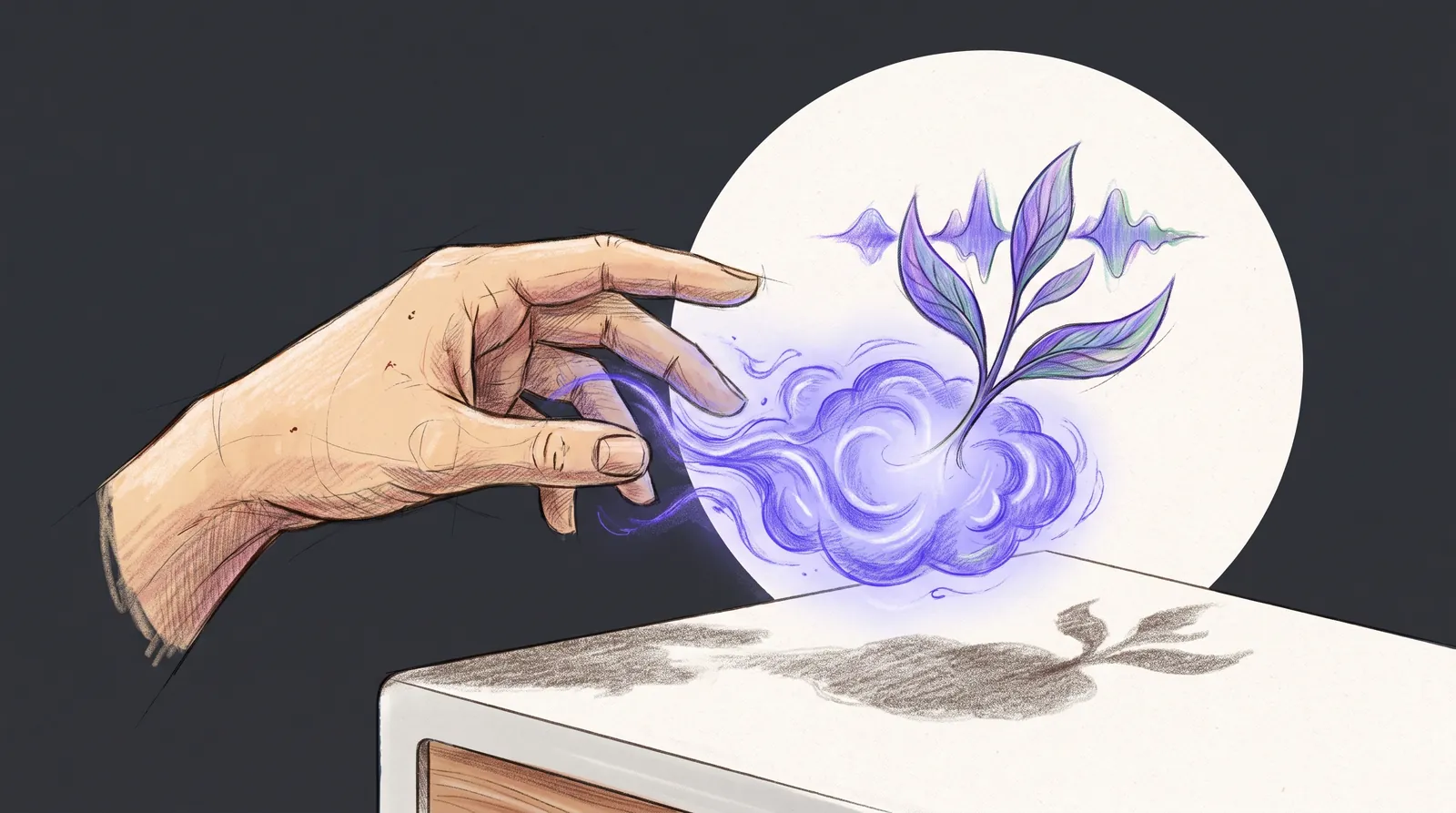
Vibe Marketing Defined: Why Emotional Connection Outperforms Big Ads
Vibe marketing builds a brand around an emotional signature, how it makes people feel, not what it sells. It sparks a “you get me” connection, reflecting a customer’s identity before making a sale. Traditional marketing pushes product benefits; vibe marketing pulls people into a feeling they want to be part of. While legacy campaigns ask “What does this do?”, vibe-first brands ask “Who do you become when you use this?”
For a startup, shifting from features to identity is how you win. A resonant signal aimed at a subculture beats a broad message backed by a big budget.
AI accelerates that shift. A solo founder can now produce TikTok edits, fan remixes, and real-time trend responses that once required an agency team. The output isn’t a billboard, it’s a vibe that spreads because people want to belong.
Vibe marketing takes a few shapes:
- Community-driven movements where fans co-create the brand.
- Meme-centric feeds where personality lives in humor.
- Influencer collaborations that feel native to the platform.
- Experience-led moments, pop-ups, late-night AI poems, that land as gifts, not ads.
Every version trades on the same principle: spend zero on explaining what you do, and everything on showing who you are.
Take a no-name skincare brand that built a cult following on TikTok without a single polished ad. It posted raw morning-routine clips, real skin texture, and ended each video with a gentle reminder to be kind to yourself. The feeling, self-acceptance, went viral. Viewers didn’t just see a moisturizer; they saw a version of themselves they wanted to be.
That’s vibe marketing: identity first, product second. For startups, that order builds loyalty long before a marketing budget can catch up.
AI-Native Vibes: How to Automate Authenticity on a Shoestring
AI-Native Vibes: How to Automate Authenticity on a Shoestring
The honest paradox of vibe marketing is that it demands relentless authenticity, the kind of energy that usually burns through a whole creative team, while most startups run on one founder and a laptop. AI bridges that gap as an execution layer with a small agency’s speed and volume, at a utility’s cost.
The mechanism is not “type a prompt and hope.” It is training a model on your brand’s actual voice document, the cadence, the inside jokes, the exact phrases you use in a DM versus a newsletter, so every output sounds like it came from you at your best.
A one-person skincare brand can feed ChatGPT 20 of their best Instagram replies and ask it to generate 50 more in the same register. The generic AI gives you corporate-sounding filler; the brand-trained version gives you replies so on-brand your own followers cannot tell the difference. That is the authenticity machine: the human sets the taste, the AI handles the volume.
Real-time sentiment analysis adds another gear. Tools that scan social conversation and flag shifting audience moods let a startup adjust its tone before a campaign feels stale. If your community is suddenly exhausted by hustle culture, your next email subject line should know that. AI surfaces the signal; you make the judgment call.
The same logic runs through 1:1 engagement, a tuned chatbot on WhatsApp that greets a repeat customer with the brand’s signature opener and routes VIPs to the founder’s phone. It is not set-it-and-forget-it; it is teaching a machine to respect the small moments that build a vibe over time.
A D2C snack brand made this concrete. Their one-person marketing team trained a simple script on the brand’s meme style and started replying to every Instagram comment with a personalized line in the same deadpan voice. The brand’s internal metrics showed a 200% engagement increase on those replies, not because the replies were funny, but because they were fast and unmistakably from the same voice. The tool cost was negligible compared to the community loyalty it bought.
The pitfall: feeding an AI generic marketing data and hoping for personality. It won’t work. It will output the statistical average of the internet, which is the opposite of a vibe.
Train it on your own raw material, your chat logs, your rejected drafts, your real voice notes, and review the output before anything goes live. When startups combine a deliberately trained AI with explicit voice rules and a founder who still makes every final call, they get what looks like a full creative department for the price of a coffee subscription. The AI is the most obedient employee you will ever have, but it only ever reflects the clarity you gave it first.
The Emotional Identity Playbook: Crafting a Brand Vibe That Sticks
Your brand’s emotional identity isn’t a mood board, it’s the single, consistent feeling a customer gets from every interaction, whether they read your packaging at midnight or open a support email at 9 a.m. Vibe marketing scales that feeling: trust, excitement, rebellion, belonging. Pick one. The brands that win don’t spray random emotions; they amplify a single signature until it becomes shorthand for their category.
Duolingo owns an absurd, deadpan Gen‑Z humor that makes language learning feel like an inside joke. Liquid Death built a billion‑dollar brand on pure irreverence, tattooed skaters and metal theatrics in a category that had only ever shown smiling beach joggers. Neither brand needed a bigger ad budget. They succeeded because they know exactly which emotion they activate, and they refuse to dilute it, even in a FAQ reply.
The practical step for a startup is to fill out a one‑page Emotional Identity Canvas. Start with the single core emotion your brand must own. From there, define:
- Three words that trigger that emotion (for Liquid Death: chaotic, defiant, loud).
- Three words you’ll never use.
- One visual or verbal cue that would instantly signal a departure from your vibe if it showed up in a customer email.
It’s not a strategy document; it’s a creative guardrail you hand to an AI model, a freelancer, or a new hire so everyone ships the same feeling.
This is where AI earns its place: you don’t guess which emotional angle resonates, you test it. A marketer sets the strategic direction and the emotional tone, then lets AI produce copy variants and content loops that each lean into a slightly different emotional shade. One variant aims for trust, another for excitement, another for belonging. You watch which version gets the response, and you double down. What used to require a full creative team now runs in continuous, iterative cycles, with a human making the final call. The result is a vibe that isn’t just declared on a brand deck, it is proven in the feed, every single day.
Low-Budget, High-Impact: 5 AI Tools to Fuel Your Vibe Marketing Engine
Most of the tools you need cost $0 to start. Stack them right, and a startup’s full vibe marketing engine costs less than a single lunch meeting with an agency you don’t need.
Content generation ChatGPT’s free tier handles short-form copy, headline variants, and customer reply drafts with zero friction, ideal when cash is tighter than time.
When consistency becomes the bottleneck, upgrade to Jasper’s Creator plan. Its brand-voice training keeps every article and email sounding like you, not like a model guessing your vibe from a single prompt, making it ideal for shipping long-form content at volume.
Visual identity Canva’s free tier powers your visual identity. Its AI-powered design tools generate meme templates, carousel graphics, and social cards that match a defined brand palette in seconds. A startup can ship a week’s worth of Instagram visuals in an afternoon, and the output looks like a team of three made it.
Social listening Brand24’s entry-level plan handles social listening by tracking emotional sentiment, not just mentions, across social channels in real time. When a customer thread shifts tone from delighted to frustrated, you know before it becomes a public problem.
Conversational engagement Conversational engagement on Instagram runs through ManyChat’s free plan, which automates DM replies and story responses while keeping the tone human. Customers get an instant, on-brand answer at 2 a.m.; you get the lead qualified before you wake up. That is vibe scaling, the systematic combination of AI for execution and automation for speed, with a human setting the guardrails.
Analytics Google Analytics 4 closes the loop with AI-powered insights that connect the audience behavior generated by the other tools to actual conversions. You stop guessing which emotional angle moved the needle and start knowing.
The integration hack Zapier ties all five tools into one low-code stack. A new ManyChat lead auto-triggers a Brand24 alert, which feeds the next week’s content angle in Jasper or ChatGPT. Build once, run continuously, tweak when the data tells you to. One marketer executes at the output level of five, which is the entire promise of vibe marketing, delivered on a budget that respects reality.
From Strategy to Action: A 6-Step Vibe Marketing Campaign for Lean Startups
With a free AI stack already assembled, you can run this six-step loop solo in under four weeks.
- Define your vibe anchor. Prompt ChatGPT to distill your brand’s core emotional promise into one sentence. That sentence becomes the north star for every asset.
- Generate content angles. Use Jasper to create ten post variants from the anchor, then pick the three that feel most authentic.
- Listen to your audience. Let Brand24 surface the exact language your audience uses right now and fold those phrases in.
- Deploy across channels. ManyChat handles real-time replies while Zapier pushes the winning angles to social.
- Measure resonance. Google Analytics 4 reveals which emotional hook drove the sign-ups.
- Iterate brutally. Kill the weak angles before week four, double down on what stuck, and run the loop again.
No over-planning, ship the feeling, let the data sharpen it.
Step 1: Define Your Core Vibe DNA
Your brand’s core vibe DNA is a single, specific emotional descriptor that anchors every interaction. Gather your co-founders for 60 minutes with a blank whiteboard and ask: “If our brand walked into a party, what energy does it bring?” Push past safe adjectives until you land on a word like “irreverent,” “empowering,” or “unsettlingly calm.” Pin that descriptor as your anchor.
Audit your top three competitors’ vibes through the same lens to find a gap you can own. Be raw where they sound polished or witty where they’re serious. The goal is a distinct emotional space, not a clone of what already exists.
Validate your vibe statement before building anything. Use a free AI survey tool like FormulAI or a ChatGPT prompt to poll 15–20 ideal customers. Show sample copy, then ask which phrase they would use to describe the brand. The descriptor that resonates most becomes your human-proven vibe statement, for example, “We’re the quirky friend who tells it like it is.” That clean, unambiguous anchor will orbit every blog post, reply, and ad you create.
Step 2: Audit Your Current Brand Presence
Measure the gap between your intended vibe and your actual output by auditing your social media, website, and customer support interactions.
- Run your last 50 social posts through a free AI sentiment tool to reveal whether your feed comes across as playful or cold, often in ways you never spotted.
- Test your top website pages with Hemingway for readability and an AI tone detector for emotional consistency. A “corporate” score when your vibe statement says “quirky friend” signals a leak.
- Export customer support chats and run them through an emotion AI model. The instant a thread tips into robotic over-politeness, your vibe fractures.
Collect every mismatch, quick fixes and rewrites alike, in a one-page vibe gap report. A self-audit costs you an afternoon and teaches you how your brand actually shows up.
Step 3: Personalize Your Vibe with AI Insights
Step 3: Personalize Your Vibe with AI Insights
You don’t need a costly tech stack to personalize your vibe. GA4’s free behavioral segments group users by what they do rather than by age or location.
Train a no-code AI model (like Teachable Machine or Obviously AI) on those segments to predict which emotional flavor, playful, aspirational, reassuring, lands hardest with each group.
With those predictions, build dynamic content rules that automatically shift these elements based on past signals:
- Email subject lines
- Story overlays
- Landing-page hero messages
A/B test the rules using AI-generated copy variants that pitch different emotional triggers head-to-head.
In days, every visitor feels like the brand was built around them. For brands that want to run this around the clock, tools like v1be’s Custom AI Training can bake the predictions straight into a content pipeline, but you can prototype the whole system this week without it.
Step 4: Assemble Your AI Toolkit
Once your tools are selected, the next priority is making them work together seamlessly.
Before a full rollout, run the full stack for one week on a single campaign, one message, one channel, one audience. That stress test exposes the broken automations and the tone mismatches that kill a vibe before it scales.
Step 5: Launch, Measure, and Optimize
Measure emotional resonance, not just reach, with KPIs that tie vibe to revenue:
- Engagement rate
- Sentiment score
- Share of voice
- Conversion lift Launch day is a checkpoint, not a victory lap, the real work starts when the data flows, and that’s where AI gives a small team an edge.
Plug your stack into a real-time AI analytics dashboard. Buffer’s free AI tools, for instance, track sentiment shifts as comments roll in, flagging a tonal misfire before it becomes a brand problem.
Run a brief automated weekly report: which formats earn trust, and which ones the algorithm ignores. Act on the findings immediately.
Double down on the formats and messages that spike positive sentiment within the first 30 days. Kill what the data calls dead, no matter how clever you thought the copy was. A vibe is testable, and the numbers won’t lie.
Step 6: Join Communities to Amplify Your Vibe
Join communities where your people already live, not every platform, just three to five that matter. Discord servers, niche Reddit threads, private Facebook groups: show up, answer questions, share links only when they genuinely help. The brands that win here never pitch; they earn the opposite of the mute button.
Run vibe-themed challenges to spark user-generated content. A small prize, early access, a handwritten note, works harder than cash.
Train an AI on your brand’s tone, like v1be’s, to handle routine community replies at 2 a.m. with the same energy you’d bring in person. When every answer sounds like you, the algorithm starts paying attention, and so do the humans.
Measuring the Unmeasurable: Tracking Emotional Connection and Vibe Marketing ROI
Vibe marketing is measurable. The tools exist, they capture signals a standard conversion dashboard ignores. The core shift: swap raw reach and clicks for sentiment scores, emoji usage patterns, and the depth of a comment thread. These numbers tell you whether your brand’s energy is landing.
Emotion-specific metrics start with sentiment analysis on every public mention.
- Sentiment analysis: a positive/negative/neutral split reveals whether a campaign tilted the emotional dial.
- Brand love NPS: ask “do you feel an emotional connection to this brand?” for a sharper view.
- Emoji ratios: a high fire-emoji-to-like ratio signals a different kind of activation than a high save count.
Engagement proxies that don’t lie include share-to-like ratio, comment depth, and UGC volume.
- Share-to-like ratio: a like is cheap, but a share costs social capital, so a climbing ratio means your content hit a nerve.
- Comment depth: a thread with five replies per comment shows the audience is finishing your sentences.
- UGC volume: when people create content about you unprompted, the vibe is working.
Emotional resonance resists last-click attribution. The workaround is uplift modeling. Run a geo-holdout test or a time-series comparison: turn on a vibe-heavy campaign in one region, keep another region dark, and measure the lift in email signup rate or repeat purchase rate that can’t be explained by other channels. That delta is your vibe ROI.
Two free tools to start tonight:
- MonkeyLearn: a no-code sentiment classifier.
- Talkwalker’s free alerts: track brand mentions and basic sentiment across the web. Neither requires a data science team. Plug them in, set a 30-day baseline, and watch what moves when you change your content voice.
Map three columns: campaign, sentiment lift (%), and downstream action rate (signups or purchases). Over a quarter, patterns emerge.
The number you’re chasing isn’t a universal benchmark, every audience calibrates differently. The measurement toolkit is already mature; your job is to train those tools on what emotion looks like for your brand.
Real-World Vibe Wins: Case Studies of Startups Punching Above Their Weight
Theory looks clean on a whiteboard. These two startups proved it holds when your whole marketing budget wouldn’t cover lunch.
One DTC skincare brand launched with zero ad spend and one conviction: their audience was exhausted by perfection. The founder used free-tier Canva and a GPT-4 prompt library tuned to a “self-love, no filter” voice to churn out 12–15 memes a week, raw, funny, sometimes messy, always on-brand. No influencer budget. No studio. Six months in, the brand’s own Instagram analytics counted 50,000 followers. They weren’t measuring sales. They measured DMs that said, “I needed this today.” Sentiment before revenue.
A freelancer SaaS took a quieter path to the same outcome. Its vibe lived inside a Slack community. Every new member got a welcome sequence written by Claude, personalized from their signup answers, mention a struggling photography business, and the message referenced booking workflow features. The founder spent 15 minutes a day in the DMs, doing what only a person can; AI handled the repetitive warmth. The founder’s subscription analytics showed churn dropping 22% in one quarter. The leading indicator was referral invites. When people start dragging friends in, the energy’s real.
Both teams ran the same playbook: map the emotional core, script the tone, let AI execute at scale, keep one founder-level voice at the center of every story. The tool stack was minimal, Canva, Buffer, ChatGPT or Claude, and a $12/month Slack workspace. The multiplier wasn’t the software. It was the decision to measure vibe first and let the funnel catch up.
Tonight, audit one touchpoint, your welcome email, your Instagram story cadence, your community reply speed, and ask whether it sounds like a person or a process. One change that sounds more like you is worth a dozen ads a stranger scrolls past. A vibe becomes a brand the moment someone feels it and reaches out.
Overcoming Vibe Marketing Hurdles: Common Challenges and AI-Powered Solutions
The biggest hurdle isn’t budget, it’s the quiet fear that AI will sand the edges off your brand and leave you sounding like everyone else. That fear is real but misplaced. AI doesn’t make a startup generic; unedited AI output does. The fix is a lightweight human-in-the-loop rule: let the model generate three drafts, pick the one closest to your voice, and spend five minutes sharpening the opening and closing lines. The middle can run on autopilot; the edges need your fingerprints.
Scaling personalization without a team breaks the same way every time: you hire a VA, teach them the tone, then they leave and you start over.
A better approach uses an AI agent that has absorbed your brand’s unique voice. It can handle:
- 24/7 WhatsApp and Instagram reception
- first drafts for blog posts
- custom CRM follow-ups All in the same voice. When combined with a multi-stage content pipeline, research, angle, draft, editor, human sign-off, you get volume without drift.
Measuring emotional impact doesn’t require a fancy dashboard. Grab your last 20 customer messages from WhatsApp or Instagram, paste them into a free LLM chat window, and ask: “Rate each reply 1–5 on warmth and on-brand energy, then tell me which ones slip into corporate-speak.” That’s your DIY sentiment audit, and it takes under an hour.
The same exercise also surfaces the exact phrases your audience responds to, save those and feed them back into your content briefs.
The time crunch is real, but batching changes the equation. One focused afternoon with a trained AI writer can produce a month’s worth of social captions, email sequences, and a long-form pillar post, all anchored to the same emotional core, all ready for that five-minute human polish. You’re not replacing your voice; you’re giving it a production line.
Tonight, take ten customer messages from the past week, paste them into ChatGPT along with your brand’s best-performing post, and ask: “What three emotional signals run through these? Write me a one-sentence vibe checklist every future reply should hit.” Use that checklist tomorrow to brief an AI receptionist, and watch whether reply speed and consistency climb together. That single exercise builds the AI layer startups actually need: fast, human, and unmistakably yours. When the tools know your energy, scaling stops being a people problem and becomes a settings problem.