What Marketing Actually Means, And What It’s Not
Marketing is the end-to-end process of creating, communicating, delivering, and exchanging value. It means building something people want, then making sure they discover it, understand why it matters, and keep coming back. The American Marketing Association formalizes it as a set of institutions and processes, but the simpler operating system is value creation from start to finish.
That definition intentionally includes customers, partners, and society at large, not just a billboard, a tweet, or a checkout flow. Marketing covers product development, pricing, distribution, customer support, and every interaction that shapes how someone experiences a brand. It is the engine, not just the exhaust.
Most people collapse marketing into sales, advertising, or public relations because all three touch the same customer, but each serves a distinct role.
Sales turns a prospect into a buyer directly. Marketing pulls people toward the brand with education, storytelling, and a consistent presence; sales then closes the deal. Marketing builds the room; sales invites the person to sit down.
Advertising is a single spoke in the marketing wheel: paid awareness, often through media placements. Marketing encompasses the full strategy, who the audience is, what they need, how the product serves them, and which channels carry the message. Advertising is one way to deliver that message, not the message itself.
Public relations shapes reputation and earns media coverage, event visibility, and community goodwill. PR shapes how the brand is perceived from the outside; marketing drives demand from the inside. The two overlap but answer different questions: PR asks, “What are they saying about us?” while marketing asks, “How do we get them to act?”
These functions blur because each one touches the same customer. A single campaign might contain paid ads, a PR angle, a sales call script, and a marketing strategy that ties them together, overlap is the point. Beginners treat them as separate silos; the mature view sees them all serving one integrated customer journey, with marketing running the playbook.
A vibe becomes a brand when every touchpoint speaks the same language. That is what marketing, in its fullest sense, delivers.
Know What Your Customer Needs at Every Stage

Listening to what customers need at each stage.
Think of the marketing funnel not as a leaky bucket but as a map. It shows you where someone is in their relationship with your brand and what they need from you right now, not next quarter. Your job at each stage switches from “get noticed” to “earn trust” to “make the transaction easy” and finally to “stay worth coming back to.”
Awareness: catching the eye without shouting
At the top, you are dealing with strangers who do not know you exist. Your only goal is to stop the scroll or earn the click.
Value-first visibility works through content that delivers immediate value:
- An SEO-optimized blog post that answers a real question
- A short-form video that teaches a five-second trick
- A paid ad that names a specific problem your audience feels today
The American Marketing Association defines marketing’s purpose as creating and delivering value. The awareness stage is where you first prove you can deliver it, before asking for anything in return.
A page that ranks for a how-to query is an asset that works while you sleep; a social post that gets saved and shared compounds the same way.
Consideration: educating, not just pitching
Once someone knows you exist, they need a reason to believe you can solve their problem better than the alternatives.
The workhorses that pull the prospect closer by demonstrating competence:
- Educational email sequences
- Detailed case studies
- Comparison guides
- Live webinars
You are not selling the product yet. You are selling the possibility that your approach fits their situation. A SaaS company, for instance, might run a webinar comparing implementation strategies across three tools, including its own, with honest trade-offs. That builds more durable trust than a feature list ever could.
Conversion: making the first “yes” easy
The conversion stage is where marketing intersects directly with sales. The job is to reduce friction around the first purchase without devaluing what you sell.
Lower the perceived cost of a bad decision with:
- Limited-time offers
- Free trials
- Zero-risk consultations
A strong call to action is specific, not clever: “Start your 14-day free trial, no card required” tells the prospect exactly what happens next. Continuing with the SaaS company: a founder finds your comparison guide via Google, attends the webinar, receives a tailored email sequence, and signs up for a trial. The trial converts to a paid plan when the value becomes obvious during onboarding.
Loyalty: the stage that funds everything else
Acquiring a new customer is expensive; keeping one is a process problem you can engineer.
Signal that the relationship did not end at the first transaction through:
- Personalized email follow-ups
- Exclusive loyalty programs
- Genuine community engagement
A repeat customer buys more often, costs less to serve, and brings in referrals. The funnel is not a one-way street. An existing customer can re-enter at the top by telling a peer about you, or at the consideration stage when you introduce a new product line. Word-of-mouth from a happy customer is the most efficient awareness channel you have. Run the loyalty stage well, and the rest of the funnel starts feeding itself.
The same voice across your blog post, webinar, and renewal email makes a stranger feel like they already know you by the time they reach conversion. At that point, the funnel stops being a diagram and becomes a growth engine.
How to Know If Your Marketing Is Working: KPIs for Every Funnel Stage

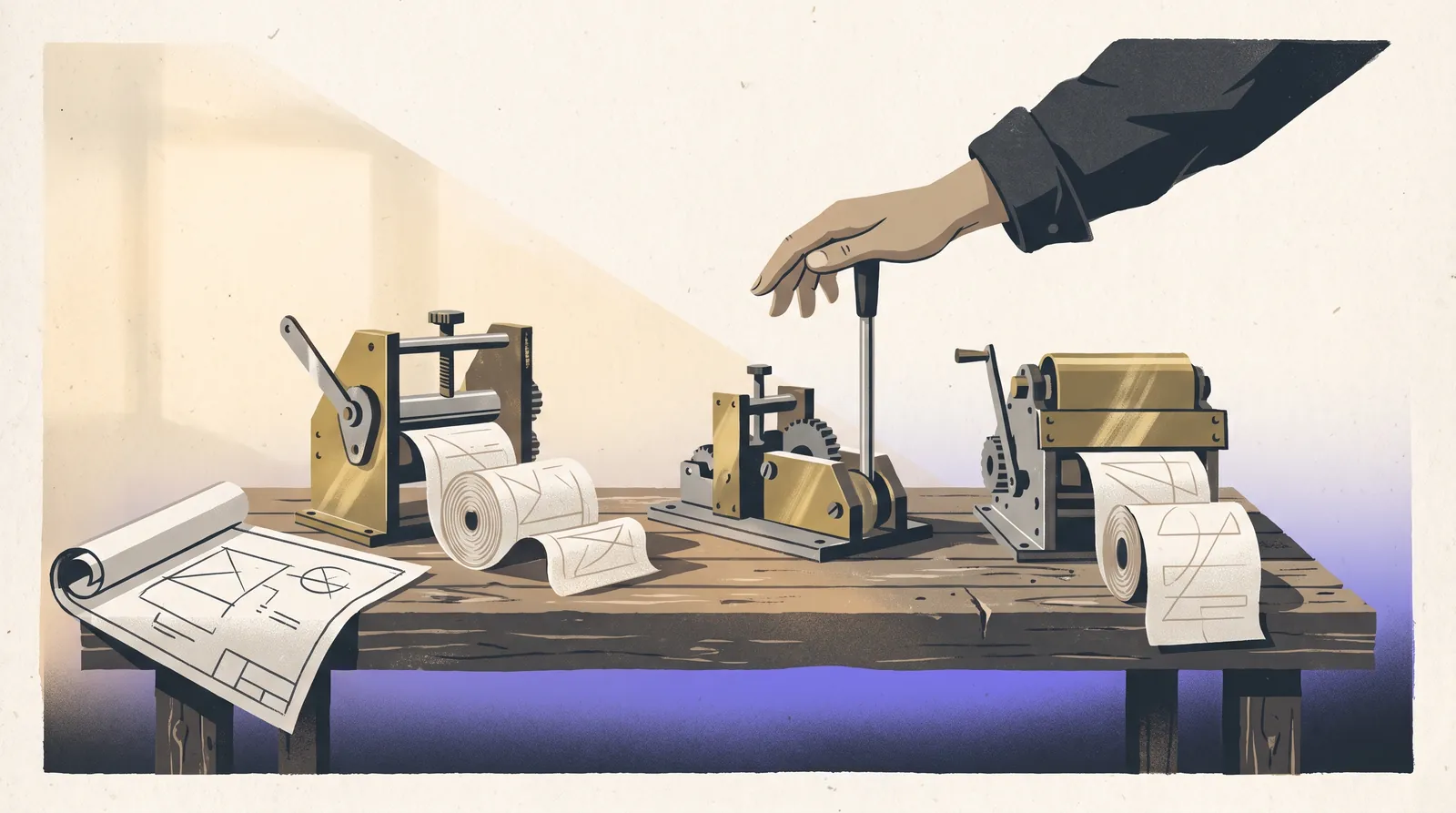
A physical metaphor for KPIs at each funnel stage.
You know your marketing is working by tracking key performance indicators (KPIs) at every funnel stage. Top-of-funnel KPIs, website traffic, impressions, social reach, show visibility. Mid-funnel KPIs, lead conversion rate, email click-through, lead quality, signal intent. Bottom-of-funnel KPIs, sales conversion rate, customer lifetime value, cost per acquisition, tie directly to revenue. A surge at one stage can hide a problem at another if you watch only the final sale.
A surge in top-of-funnel traffic means nothing if it never converts. A healthy conversion rate today can mask a drying pipeline tomorrow. You find leaks by watching the full funnel.
Top-of-funnel metrics tell you if anyone is even noticing. Track these signals:
- Website traffic
- Impressions
- Social reach
- Direct brand searches
A spike in impressions without a matching lift in click-through rate signals that your creative is grabbing eyes but not minds. Brand mentions, organic or earned, are a softer signal, but a rising trend often precedes a jump in site visits.
Mid-funnel is where interest hardens into intent. Core metrics include:
- Lead conversion rate (what percentage of visitors submit an email or download content)
- Email click-through rate
- Content download counts
- Lead quality scores (segmented by fit to your ideal customer profile)
Many founders obsess over total leads, but a thousand low-fit names clogging a CRM is a cost, not an asset.
Bottom-of-funnel is where the business case lives. Key numbers tie marketing spend to revenue:
- Sales conversion rate
- Cost per acquisition (CPA) for paid channels
- Customer lifetime value (CLV)
- Return on ad spend (ROAS)
CLV deserves extra attention. If your average customer buys three times at $100 each, a $50 CPA is brilliant but a $250 CPA is still profitable. You cannot set the CPA ceiling without knowing the CLV.
Vanity metrics like raw likes or shares mislead unless you connect them to engagement depth. A viral post that drives zero click-throughs is noise, not signal.
Use tools like Google Analytics, HubSpot, or a custom dashboard in Looker Studio to visualize funnel performance in one view, so the relationship between top-of-funnel activity and bottom-of-funnel revenue is always visible. The goal is a single pane of glass that answers one question: where are we losing people?
Tracking the full funnel also lets you catch momentum shifts early. A sudden drop in mid-funnel conversion may be a broken form, not a demand problem. A slow drift in CLV across acquisition channels tells you to audit product quality or onboarding speed.
Marketing measurement is not a monthly report, it is a daily diagnostic. The funnel turns from a diagram into an actionable dashboard the moment you know exactly which metric to fix next.
Digital Channels That Move the Needle, and How to Pick Yours
Digital channels are the distribution layer that puts your message on a buyer’s radar. The art isn’t being everywhere; it’s picking the two or three places your audience actually lives and designing a handoff sequence that moves them down the funnel without friction.
- Social media earns attention at the top of the funnel, building awareness and shaping brand energy for audiences not yet searching for you.
- Email picks up the relationship mid-funnel and carries it through to loyalty: a welcome series educates, a segmented offer converts, and a well-timed replenishment reminder brings a customer back.
- Search engines, through SEO, catch the moment of active intent when someone types exactly what they need.
- Paid ads accelerate any stage, from cold audiences to retargeting, if the unit economics justify it.
- Content marketing (blog posts, guides, videos) does the heavy lifting for consideration, answering “why this?” and “how does it compare?” before a sales call ever happens.
- Influencer partnerships borrow trust; a credible third party introduces your product to a warm, pre-qualified community.
Mapping these to the funnel stops the spray-and-pray pattern. A local bakery, for example, doesn’t need LinkedIn ads and a podcast sponsorship. It needs Instagram Reels of the morning bake and a “birthday club” email sequence that drives repeat orders on predictable dates. Instagram builds the craving (awareness), and email turns the craving into a ritual (loyalty), a complete funnel with two channels.
Choosing yours comes down to four factors:
- Where your audience spends attention (demographics plus platform behavior)
- Your budget’s tolerance for paid versus organic
- Whether you sell B2B or B2C
- The creative bandwidth you can sustain weekly
For example, a B2B consultancy thrives on LinkedIn articles and an email newsletter, while a DTC skincare brand lives on TikTok demos, influencer reviews, and SMS reorder prompts. Start with two or three channels you can run well before adding more. Spreading too thin across six platforms dilutes results on every one; depth in one channel beats a ghost town on five.
Align every channel decision to a specific customer journey touchpoint. Ask: is this channel where they first hear about the category, where they evaluate options, or where they re-engage? A brand-trained AI writer can keep the voice consistent across blog and email while a 24/7 AI receptionist handles the WhatsApp and Instagram DMs that follow a late-night ad click, so a prospect never waits until office hours for an answer. Spend your marketing budget on the channels that connect a real human pattern to a real next step.
The Silent Funnel Killers: Marketing Mistakes That Stop Your Growth
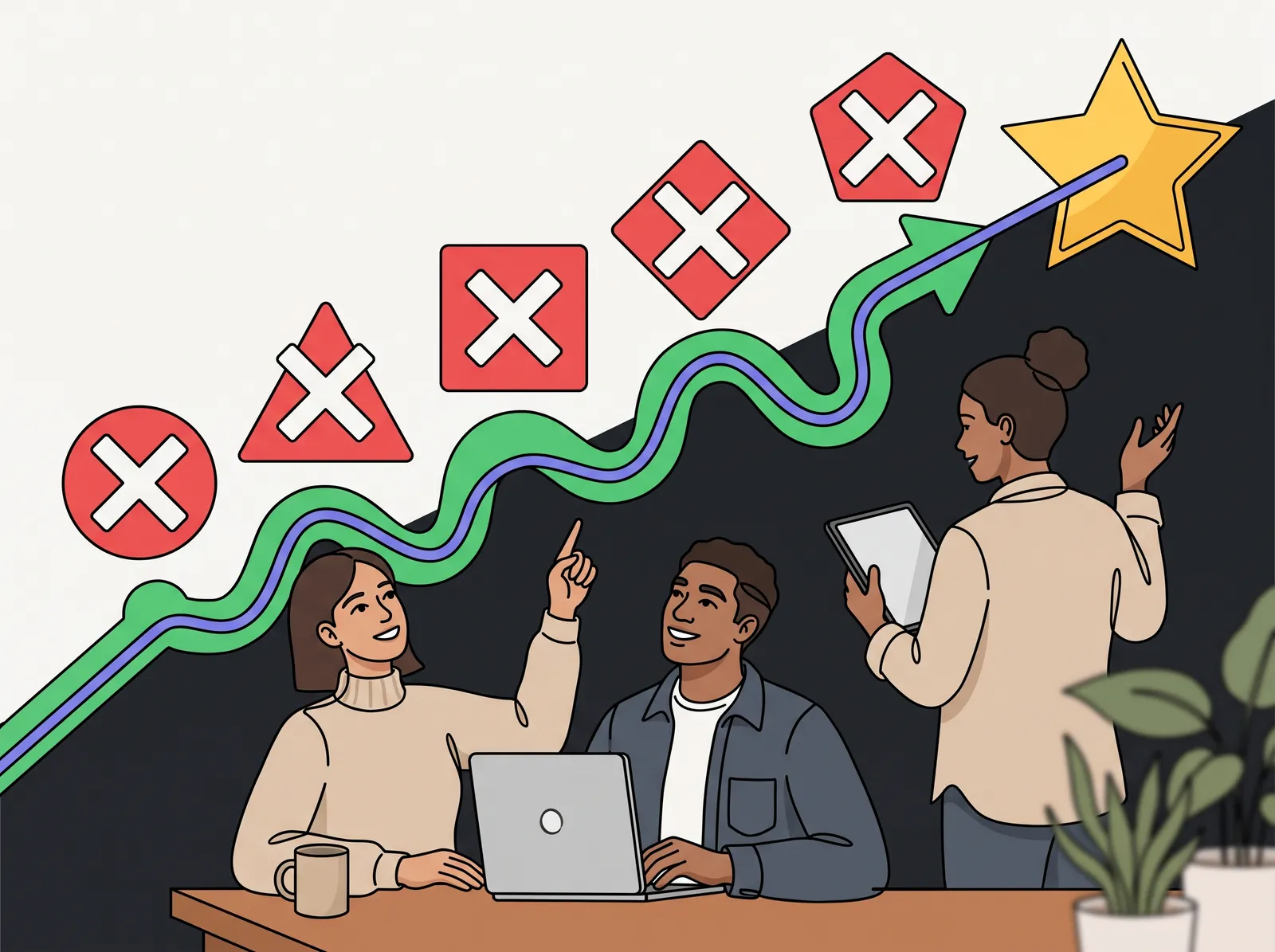
What happens when funnel mistakes go unnoticed.
Your funnel isn’t broken because you lack traffic. It’s broken because of these silent killers:
- Neglecting retention
- Inconsistent branding
- Marketing without clear buyer personas
- Over-reliance on a single channel
- Ignoring data
Neglecting retention tops the list. Too many teams act as if the job ends at the first purchase. Churn eats a customer base faster than acquisition can fill it if you never send a re-engagement email, a personalized offer, or a simple “thanks for being here.” Retention is cheaper and turns customers into advocates. Existing customers aren’t solved; they’re the next stage of your funnel, not the exit.
Inconsistent branding kills trust. When your Instagram replies sound like a Gen-Z intern and your email campaign reads like corporate HR, the prospect’s brain has to reconcile two different companies. Trust fractures. You don’t need a single tone-of-voice document that lives in a PDF; you need every output, from a late-night WhatsApp reply to a blog post, to carry the same recognizable energy. A confused mind says “no” more often than a skeptical one.
Marketing without clear buyer personas is shouting into a void. HubSpot defines a persona as someone whose interests you understand deeply. Without that clarity, your messaging is generic, and generic fails the “that’s for me” test every time.
You waste ad spend showing a product manager the same creative you’d show a CMO. Document who you’re actually talking to: their fears, how they buy. Then watch your conversion rates stop wandering.
Over-reliance on a single channel is a bet on a platform you don’t control. An algorithm change, rising CPMs, or a policy update can wipe out your pipeline overnight. AI-driven tools (predictive analytics, personalised website experiences) now show where your audience actually converts, not where a manager feels comfortable. Diversify across two or three data-backed channels, and test a new one quarterly.
Ignoring data is the final, fatal leak. CIM points out that predictive analytics and AI-powered customer service are available; failing to use them leaves growth on the table. If you’re not:
- measuring drop-off rates between funnel stages,
- running A/B tests on key pages, or
- tracking which content moves people from consideration to decision, you’re steering blind.
Audit your funnel this week. Map every stage from awareness to advocacy, and find the biggest percentage drop. Is 60% of site visitors bouncing from the homepage? Or 80% of add-to-carts abandoning checkout? Fix the biggest leak first, run one test, and let the data direct your next move. Plug these silent holes, and the same traffic suddenly feels like a bigger budget.
The 4 Ps Show You Where Your Funnel Breaks
The marketing mix (the 4 Ps: Product, Price, Place, Promotion) remains the fastest gut-check for whether your funnel holds together. Popularized by Neil Borden in the 1950s, it still works today. Each P maps to a different stage of the customer journey. Product and Price dominate consideration and decision: a product that doesn’t solve a real need, or a price that doesn’t match perceived value, stalls a qualified lead instantly. Promotion drives top-of-funnel awareness. Place (distribution channels) governs accessibility at every stage. If customers can’t buy or engage where they actually spend time, the rest of the mix is academic.
For service-based brands, the model extends to the 7 Ps, adding People, Process, and Physical Evidence. These three are the operational backbone behind the promise your Promotion makes. A beautifully packaged unboxing experience is Physical Evidence. In a services business, a weak Process creates a leak in the loyalty stage that no amount of advertising can patch.
Two other frameworks sharpen the 4 Ps before you spend a dollar. STP (Segmentation, Targeting, and Positioning) forces you to stop marketing to everyone and start talking to someone specific. It’s the prerequisite: you can’t set a price or write a promotion until you know exactly who you’re serving and what position you own in their mind.
SWOT analysis, a brutally honest look at Strengths, Weaknesses, Opportunities, and Threats, is the internal and external check. A strength might be a patent on your Product formula; a threat might be a competitor shifting Place to a channel you’ve ignored.
The practical application is a sanity audit. Take your funnel data from the previous stage and map it against the 4 Ps. A software company notices a sharp drop-off between free trial and paid plan. The problem isn’t promotion, traffic is flowing. Either the Product isn’t delivering a quick enough win during the trial, or the Price anchors too high before value is proven. The fix is a packaging or pricing experiment, not another ad campaign. When all four Ps push in the same direction, the funnel tightens. When one pulls against the others, you feel it as a conversion gap.
Build Your First Funnel in 30 Minutes: 5 Steps, No Big Budget
Building a funnel doesn’t demand a giant budget or a massive team. It demands clarity, and that starts with the person you want to reach. Block out 30 minutes, grab a blank page, and follow these five steps.
-
Define your buyer persona with just enough detail to make decisions. Note three demographics (age bracket, role, location), the single biggest pain point your product solves, and the goal they’re actively trying to achieve. That snapshot keeps every later step honest.
-
Pick one awareness channel and create one valuable piece of content for it. If your persona lives on Instagram, post a short video solving a common mistake. If they search Google, write an 800-word blog post that honestly answers their top question. A Canva template handles the design in minutes; focus your energy on substance, not polish. A free scheduler like Buffer or Later can push that post out while you move on.
-
Set up a low-friction lead magnet (a one-page checklist, a template, a five-day email course) and connect it to an automated welcome sequence. Mailchimp’s free tier gives you the landing page, the signup form, and the emails all in one place. The sequence should deliver the lead magnet, then send two or three helpful insights over the following week. This is your consideration engine; it educates while it builds trust.
-
Create a low-risk first offer to turn consideration into conversion. A free 20-minute consultation, a discounted trial, or a “starter kit” at a significantly reduced price removes the fear of a wrong decision. The goal is not profit on the first transaction; it’s proof that the relationship works.
-
Start the post-purchase flow the moment someone pays. A plain thank-you email, a quick onboarding guide, and a check-in three days later make churn far less likely. This step turns a one-time buyer into a repeat customer and, eventually, a referrer. To measure every stage, install Google Analytics (it’s free) so you can watch the numbers and spot exactly where people drop.
The funnel above runs on clarity, not cash. But clarity starts with knowing where you stand. Request a one-on-one Brand Analysis from v1be tonight. It’s a human conversation that maps your market, your competitors, and the content gaps that would otherwise leak your funnel dry before it ever gets going. No generic tool will hand you that. Lock in your positioning, then build the steps.